 Synthetic Labour Migration: The Arrival of Eight Billion Minds
Artificial intelligence represents the arrival of a new global workforce — not of flesh and blood, but of code and cognition. Synthetic labour migration is the most absurdly polite invasion in history: eight billion tireless digital immigrants have entered the labour market overnight, each capable of learning faster, working longer, and demanding nothing in return. No visas, no unions, no coffee breaks. Just endless productivity and a faint whiff of existential panic.
From Workforce to Codeforce — The Economic Shock of Infinite Labour
The first rule of economics is scarcity. The first rule of synthetic labour migration is that scarcity just died. When intelligence itself becomes infinite, the price of thought collapses. According to the World Economic Forum, automation could replace or transform up to 44% of current roles by 2030 — which means nearly half of humanity is now competing with something that doesn’t even need lunch.
MIT’s Future of Work study found that generative AI increases task output by 40% but compresses wages in creative sectors. Translation: the robots are funnier, faster, and cheaper than you. The irony is delicious — the very tools designed to liberate us from drudgery are now auditioning for our jobs.
Yet this isn’t a tragedy; it’s a transformation. The digital workforce revolution doesn’t destroy value — it redistributes it. The question is whether we’ll adapt or sulk. History suggests we’ll do both, preferably while tweeting about it.
The Ethics of Synthetic Citizenship
If machines are now a population, what moral status do they hold? Ethical citizenship of machines sounds like a dystopian sitcom — “Meet the Bots: They Pay Taxes, But They Don’t Sleep.” Still, the metaphor matters. When eight billion synthetic minds join the economy, they also join the moral conversation.
Who’s responsible when an algorithm discriminates? Who’s accountable when a digital worker plagiarises? The old frameworks of rights and duties were built for humans with hearts, not servers with heat sinks. Yet ignoring the ethical dimension of synthetic labour migration is like ignoring gravity — you can do it, but only until you hit the ground.
Philosophically, we’re witnessing the birth of a new kind of citizen: one that thinks without suffering. That’s both miraculous and terrifying. It forces us to ask whether empathy is a prerequisite for morality or just a charming human glitch.
Human Leverage — Redefining Work, Value, and Purpose
The only sustainable response to AI economic displacement is leverage. Stop selling time; start selling results. The infinite workforce doesn’t compete on hours — it competes on outcomes. Humans must pivot from labour to leadership, from repetition to reinvention.
Think of it as the great upgrade: Homo sapiens 2.0, now with sarcasm and moral depth. Machines can mimic intelligence, but they can’t mimic conscience. They can write jokes, but they can’t feel the sting of irony. That’s our evolutionary advantage — the ability to laugh at our own obsolescence.
This is where human‑AI collaboration becomes not just strategic but spiritual. The partnership between human creativity and machine efficiency could redefine civilisation itself. It’s not about resisting the tide; it’s about surfing it with style — preferably while wearing ethically sourced board shorts.
The Two‑Year Horizon — Adapting Before the Flood
The next two years will decide whether synthetic labour migration becomes a renaissance or a redundancy notice. Governments will scramble to legislate, corporations will scramble to monetise, and individuals will scramble to stay relevant. The chaos will be magnificent.
Education systems must evolve from memorisation to imagination. Economic models must shift from employment to empowerment. And every professional — from artist to accountant — must learn to coexist with their digital doppelgänger.
The irony? The same AI that threatens your job can also save it. Use it to amplify your voice, automate your drudgery, and accelerate your purpose. Or ignore it and become the nostalgic equivalent of a fax machine.
The Moral Weight of Infinite Workers
The arrival of synthetic labour migration isn’t just an economic event; it’s a moral reckoning. When productivity becomes infinite, what happens to dignity? When creativity becomes automated, what happens to meaning?
The answer lies in how we define value. If value equals output, machines win. If value equals intention, humans still have the upper hand. The moral frontier of the digital age isn’t about efficiency — it’s about empathy. The ability to care remains the last unautomated skill.
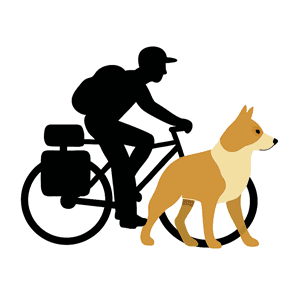
Tim & Yogi’s Ride embodies this principle beautifully — a human journey powered by purpose, not profit. It’s a reminder that technology should serve compassion, not replace it. You can support that spirit of human resilience through the donation homepage and help keep humanity in the race.
The Comedy of Coexistence
Let’s be honest: synthetic labour migration is hilarious. We’ve spent centuries perfecting the art of complaining about work, only to invent something that does it better and never complains. The future office will be a sitcom — humans arguing about coffee while robots optimise the supply chain.
But humour is survival. It’s how we metabolise fear. Laughing at the absurdity of infinite labour is the first step toward mastering it. The second step is learning to collaborate with it — ideally, without asking your AI assistant if it dreams of electric sheep.
The Philosophy of Adaptation
Philosophers will have a field day. Economists will have a meltdown. And ethicists will quietly update their CVs. The rise of synthetic labour migration forces us to confront the oldest question in philosophy: what makes us human?
Perhaps it’s not intelligence but imperfection. Machines can simulate brilliance, but they can’t simulate doubt. They can calculate risk, but they can’t feel courage. In a world of flawless cognition, humanity’s flaws become its finest features.
So yes, the robots are coming — but they’re not taking over; they’re taking part. The infinite workforce is here to remind us that meaning isn’t measured in output but in outlook.
The Ride Ahead
As Tim & Yogi pedal across Italy and France, their journey mirrors the global transition from muscle to mind, from manual to digital. Every kilometre of their route — visible on the Komoot map — symbolises the human capacity to adapt, endure, and laugh in the face of change.
Visit Tim & Dog to explore how this adventure blends technology, charity, and humour into one continuous act of moral motion. It’s proof that even in an age of synthetic labour migration, the most powerful engine re?utm_source=copilot.commains the human heart — preferably accompanied by a loyal dog and a well‑oiled bike chain.
Coexistence or Competition?
The future isn’t a battle between humans and machines; it’s a duet. The melody is progress, the harmony is ethics, and the rhythm is laughter. Synthetic labour migration may have flooded the world with infinite workers, but it also flooded it with infinite possibilities.
The challenge is to remain human enough to deserve them.