 AI and Humanity: The Coming Storm We Can’t Outsource
The Ground Is Moving — And I’m Getting Off the Ride
AI and humanity are now bound together in a way that feels less like a partnership and more like being handcuffed to a high‑speed train whose driver has stepped out for a cigarette. There are moments in history when you can feel the ground shifting beneath your feet — and this is one of them. Not metaphorically. I mean the genuine sensation that the world you’ve known is quietly packing its bags and slipping out the back door.
Artificial intelligence isn’t politely waiting for us to catch up. European contributors to the Stanford AI Index note that AI capability has been doubling at a pace that makes the Industrial Revolution look like a leisurely stroll through a museum. Analysts at Oxford’s Future of Humanity Institute warn that the next decade will bring “unprecedented disruption” to labour markets, social cohesion, and political stability across Europe. MIT’s Technology Review calls this acceleration the fastest of any general‑purpose technology in human history.
Lovely. Just what we needed — a continental identity crisis with a side order of structural unemployment.
And after watching this technological avalanche gather speed, I’ve reached a bold, dramatic, and — according to several friends — “slightly unhinged” conclusion:
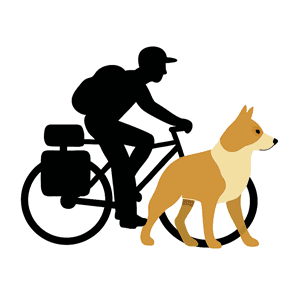
I’m walking away from technology. I’m done. Finished. I’m taking my dog, my bicycle, and what remains of my sanity, and I’m leaving the machines to sort themselves out.
If the robots want the future, they can have it. I’ll be somewhere between a mountain pass and a coastline, pedalling slowly and wondering why I ever thought email was important.
The Acceleration Nobody in Europe Is Ready For
Innovation Has Changed Shape
The future of AI is no longer about tools; it’s about force multipliers. AI is the intellectual equivalent of strapping a jet engine to a bicycle and hoping the frame holds.
Mo Gawdat captured this perfectly. He said innovation used to be like chess — slow, strategic, predictable. You could see the board, anticipate the moves, and plan your response.
But now, innovation is squash — fast, reactive, chaotic. The ball ricochets unpredictably, and you’re already late before you’ve even moved.
The Jobs Falling First
Across Europe, the OECD estimates that more than a quarter of jobs are at high risk of automation. The World Economic Forum predicts tens of millions of roles will disappear globally by 2030, with Europe disproportionately affected due to its ageing workforce and rigid labour markets. PwC’s European analysis suggests that up to 30% of roles in some EU countries could be automated by the mid‑2030s.
But here’s the twist for AI and jobs: The first roles to go aren’t the ones people expect.
It’s not just repetitive manual work. It’s predictable cognitive work.
- Junior analysts
- Assistants
- Researchers
- Administrators
- Customer support
- Middle‑tier operations
- Entry‑level anything
The Stanford AI Index shows that AI now outperforms humans in reading comprehension, translation, summarisation, coding, and data analysis — and it’s closing in on strategic reasoning.
The Ladder Is Gone
The traditional European ladder of economic mobility — start at the bottom, learn, move up — is being quietly dismantled.
And nobody is building a new one.
Which is partly why I’m leaving. If the machines want the spreadsheets, they can have them. I’ll be on a bicycle, trying to remember what silence sounds like.
The Economic Earthquake Europe Doesn’t Want to Name
The Loop That Holds Everything Together
The European economy is built on a simple loop: People work → people earn → people spend → businesses survive.
Remove the first step and the whole thing collapses like a badly assembled IKEA wardrobe.
In the EU, household consumption accounts for roughly half of GDP. If millions lose their jobs or see their incomes eroded by automation, consumption falls. When consumption falls, businesses fail. When businesses fail, governments panic. And when governments panic, they do what they always do — argue with each other while the rest of us look for candles and tinned food.
The Political Theatre of Solutions
Some propose a Universal Basic Income (UBI) in the billionaire world, as if billionaires are going to pay us all from their own wallets to do nothing. Some propose reskilling. Some propose “innovation hubs,” which is political code for “we have no idea, but it sounds good in Brussels.”
The Human Cost
We are entering a decade where millions will feel economically useless for the first time in their lives.
And that is not a technological problem. It is a human one.
And frankly, it’s another reason I’m leaving. If the economy is going to collapse, I’d rather be outdoors when it happens.
The Collapse of Reality (and Why Europe Should Worry)
The Line Between Real and Artificial Is Blurring
One of the most unsettling shifts in the future of AI is the erosion of reality itself.
Deepfakes, synthetic influencers, AI‑generated relationships, algorithmic echo chambers — the line between real and artificial is dissolving. European surveys echo Pew Research findings: a majority of people can no longer confidently distinguish AI‑generated content from human content. UNESCO has warned that AI‑driven misinformation represents a systemic threat to democratic stability — particularly in Europe, where political fragmentation is already a sport.
The Outsourcing of Emotion
But the real danger isn’t that AI can fake reality. It’s that humans can now outsource emotional connection.
Connection — the thing that has held our species together through war, famine, plague, and Eurovision — is now something you can simulate with a subscription.
We are entering a world where loneliness can be masked, affection can be manufactured, and companionship can be downloaded.
It may soothe the symptoms. It does nothing for the soul.
Why I’m Choosing the Road
Human connection is not optional. It is the operating system of civilisation.
Remove it, and everything else crashes.
Which is why I’m choosing the road. The real one. The one with potholes, weather, and the occasional confused goat.
Accountability: The Missing Ingredient in AI Ethics
The Mirror Nobody Wants to Look Into
AI is not the problem. Humans are.
AI is a mirror — it reflects the values of whoever holds it. Give it to people driven by fear, greed, or power, and you get dystopia. Give it to people driven by compassion, ethics, and responsibility, and you get progress.
The Vanishing of Responsibility
The problem is that accountability has evaporated.
- Influencers can give reckless advice with no consequences.
- Tech leaders can reshape society without public consent.
- Political actors across the spectrum can weaponise AI for persuasion and manipulation.
- The public — overwhelmed, exhausted, distracted — can barely keep up.
European regulators admit privately what MIT’s AI Policy Observatory states publicly: governance is lagging behind capability by years, not months.
Years — in a field that evolves weekly.
Why Ethics Matters More Than Ever
This is why AI ethics is not a luxury. It is the only thing standing between us and chaos.
And it’s why I’m stepping away. Not because I don’t care — but because I care too much to watch this unfold from behind a screen.
The Moral Duty We Cannot Outsource
The Responsibility Is Ours
We cannot rely on governments, corporations, or institutions to save us. Not the centre‑left. Not the centre‑right. Not the far‑left. Not the far‑right.
Everyone is too busy arguing about who is right to focus on what is necessary.
What We Must Do
We must:
- Use AI responsibly
- Demand transparency
- Reject manipulation
- Build tools that help, not harm
- Strengthen human connection
- Support those who fall through the cracks
- Share knowledge
- Act with integrity
- Choose compassion over division
This is not idealism. This is survival.
And for me, survival looks like a bicycle, a dog, and a very long road.
The Hope Nobody Expects
Why I Still Believe in Us
I believe we will get through it.
Not because AI will save us. Not because politics will save us. Not because the economy will magically stabilise.
But because humans, when pushed to the edge, rediscover what matters.
European behavioural studies echo findings from Oxford’s wellbeing researchers: cooperation spikes during crises. Social neuroscience labs — including Stanford’s — show that humans are neurologically wired for empathy. And the World Happiness Report consistently finds that social support is the strongest predictor of resilience.
The Invitation
When things get hard, we come together.
We always have. We always will.
Which is why I’m inviting you — yes, you — to join me.
The Path Forward for AI in Europe (and the Path I’m Taking Instead)
1. Master AI
Not casually. Not occasionally. Master it. Use AI as an extension of your intelligence, not a replacement for it.
2. Stay Agile
The world is moving fast. Standing still is moving backwards.
3. Build Ethically
Every decision: Does this help people? Does this harm people? Does this strengthen humanity?
4. Strengthen Human Connection
Talk to people. Support people. Listen to people. We are the safety net.
5. Question Everything
Propaganda is now automated. Critical thinking is your shield.
And Now… I’m Leaving Technology Behind
I’ve had enough. I’m stepping away from the screens, the noise, the acceleration, the chaos.
I’m taking my dog, my bicycle, and my last remaining nerve cell, and I’m heading out on Tim & Yogi’s Ride — a long, slow, human journey around Italy.
And if you want to see the full route — the climbs, the coastlines, the islands, the madness.
If you’d like to join me for any stage — a day, a weekend, a week — contact me. I’d genuinely love the company.
And if you’d like to support the charities behind the ride, please donate. Every contribution helps, and every act of kindness matters.
The Final Truth
AI is not our enemy. AI is not our saviour.
AI is a tool — powerful, neutral, indifferent.
The real question is not what AI will become. The real question is what we will become.
If we choose fear, division, and selfishness, the next decade will be brutal. If we choose unity, compassion, and responsibility, the next decade will be transformative.
We are one human family. One species. One shared future.
And as for me — I’ll be somewhere on the road, with Yogi, a bicycle, and the quiet certainty that sometimes the best way to understand the future… is to step away from it.